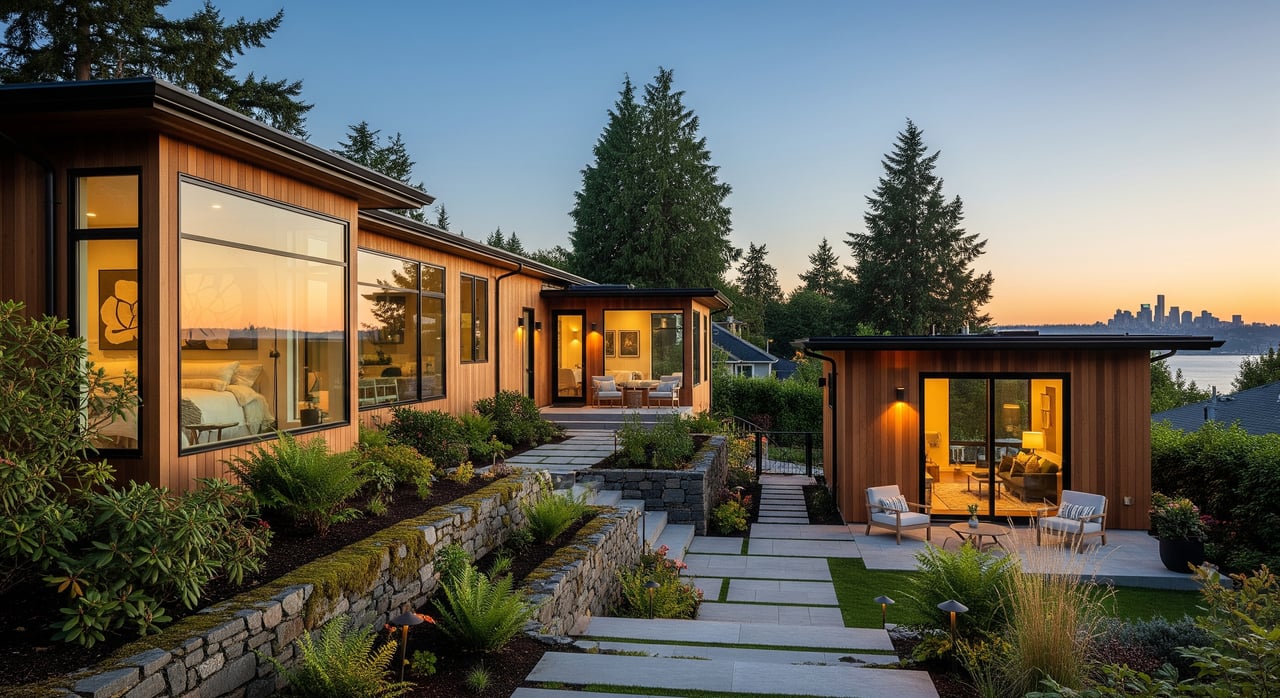
Thinking about adding a backyard cottage or converting a basement suite to create more space or income in Seattle? You are not alone. With housing needs evolving and equity tied up in homes, an ADU or DADU can be a smart, flexible move. In this guide, you will learn the key differences, how Seattle’s rules affect your project, ballpark costs and timelines, and a clear plan to move forward with confidence. Let’s dive in.
ADU vs DADU in plain language
An Accessory Dwelling Unit (ADU) is a secondary home created within or attached to your main house. Common examples include converting a basement or attic, or adding a new attached wing with its own kitchen and bath.
A Detached Accessory Dwelling Unit (DADU) is a free-standing small home on the same lot as your primary residence. You might hear it called a backyard cottage or a unit above a detached garage.
Both add livable space with a kitchen, bathroom, and a separate sleeping area. The main differences are where they sit on your lot, how they connect to utilities, and how their design interacts with zoning and site limits.
Which type fits your goals?
If you want the most budget‑friendly path to a second unit, an interior or attached ADU often makes sense. You may be reusing existing walls, roof, and systems, which can reduce cost and construction time.
If you value privacy and separation or want a dedicated structure for multigenerational living, a DADU can be ideal. Backyard cottages shine when you want quiet space for a relative, an office, or a long‑term rental with more independence from the main house.
Consider these quick guides:
- Choose an ADU if you plan to convert unfinished space, want lower site work, and prefer to keep the new unit within your home’s footprint.
- Choose a DADU if your yard can accommodate a small structure and you want more privacy, flexibility of layout, and a cottage feel.
What Seattle rules affect your project?
Seattle’s standards depend on your property’s zoning, lot size, and site conditions. Always verify current requirements with the Seattle Department of Construction & Inspections. You can start on the SDCI main site.
Where ADUs and DADUs are allowed
ADUs and DADUs are typically allowed in many single‑family zones and some low‑rise multifamily zones, subject to specific conditions. Your first step is to confirm your zoning and any overlays for your address on the City’s zoning tools linked from the SDCI website.
Size, height, and setbacks
Cities often cap the size of accessory units and limit the total units allowed per lot. Detached structures must also meet height limits, rear and side yard setbacks, and lot coverage rules that can influence the footprint and number of stories. Treat any square‑foot maximums you hear as rough; verify the current numbers in the Seattle Municipal Code or with SDCI before you design.
Parking and access
Some cities reduce or waive off‑street parking requirements for accessory units, while others require at least one space for DADUs. Because parking rules can shift, confirm current standards with SDCI during pre‑planning.
Utilities and stormwater
An ADU inside your home can share systems more easily. A DADU generally needs dedicated connections or sub‑metering, and new roof or driveway area may trigger drainage and stormwater review. If you are on a septic or private sewer, additional approvals are common. Discuss capacity and connection options with your designer and confirm permit requirements with SDCI.
Owner‑occupancy and rental rules
Owner‑occupancy requirements and rental regulations, including short‑term rentals, can change. If you plan to rent your unit, verify owner‑occupancy rules, business licensing, rental registration, and any short‑term rental limits with SDCI and the Seattle Municipal Code before you invest in a specific strategy.
Historic districts and critical areas
Properties in historic districts or near steep slopes, shorelines, wetlands, or floodplains often face additional design standards or studies. Ask about these early so you can budget time and cost appropriately. SDCI’s pre‑application services can help you identify constraints upfront.
Cost ranges and budgeting in Seattle
Costs vary widely by site and design. For 2024–2025 market context in Seattle, these ballpark ranges can help you plan. Always seek local contractor quotes before setting a budget.
- Interior or attached ADU: about $80,000 to $250,000 or more, depending on structural changes and finish level.
- Detached ADU (DADU): about $150,000 to $450,000 or more, driven by size, foundation, utility work, and site improvements.
Factors that push costs higher include tight urban lots, utility upgrades, stormwater requirements, and premium finishes. Two‑story DADUs, basements, or complex foundations typically add cost.
Additional items to include in your budget:
- Architectural and engineering fees
- Property survey and geotechnical studies if required
- Building, trade, and potential environmental review fees
- Utility connection or capacity upgrade fees
- Landscaping, access paths, and exterior lighting
- Temporary housing or tenant coordination if needed
For potential tax impacts, note that new livable square footage can affect assessed value. Visit the King County Assessor for property assessment information, and consult a tax professional about income tax on rentals.
How long it takes in Seattle
Timelines depend on complexity, review cycles, and contractor availability. Expect ranges rather than fixed dates, and verify with your project team and SDCI.
- Interior ADU: plan for 1 to 3 months for planning and permits, plus 1 to 4 months for construction.
- DADU: plan for 2 to 6 months for planning and permits, plus 3 to 9 months or more for construction.
Design review, unusual site constraints, utility upgrades, and permit backlogs can extend timelines. Build in contingency time and keep your design responsive to reviewer feedback to avoid rework.
Permitting steps at a glance
Seattle’s permit process is detailed, but the path is manageable when you work step by step. Most homeowners follow this sequence:
Preliminary research
- Confirm zoning, lot coverage limits, and whether an ADU or DADU is allowed on your lot.
- Use SDCI’s tools and consider a zoning or permit consultant. Start with the SDCI site.
Concept and design
- Draft a program for size, bedrooms, and kitchen/bath. Commission a site survey and early utilities plan.
- Consider a pre‑application conversation with SDCI for complex sites or historic and critical area questions.
Apply for permits
- Prepare building plans, elevations, site plan, energy code documentation, and utility plans.
- Submit through SDCI’s permit portal referenced on the SDCI website. Include trade permits such as electrical, plumbing, and mechanical.
Review and corrections
- Respond to reviewer comments, revise plans as needed, and resubmit until approved.
Permit issuance and construction
- Your contractor or you, as owner‑builder, pulls permits. Schedule inspections for foundation, framing, MEP, and final.
Final inspection and occupancy
- After final approvals, you can occupy or rent the unit per City rules. If you plan to rent, confirm licensing and registration with SDCI.
Financing and income planning
Homeowners commonly use one or more of these funding paths:
- Cash or savings
- Home equity line of credit (HELOC) or home equity loan
- Construction loan or refinance into a single mortgage
- Personal loans or contractor financing
- City or nonprofit incentives when available for specific housing programs
If you plan to rent your ADU or DADU, speak with a tax professional about rental income and depreciation. For assessment impacts, review guidance from the King County Assessor.
Real‑world use cases for Seattle homes
Multigenerational living
An on‑site home for a parent or adult child can keep family close while preserving privacy. A DADU often provides the best separation. Plan for accessibility, aging‑in‑place features, and a layout that supports independence.
Long‑term rental income
A well‑designed ADU or DADU can offset your mortgage with stable monthly rent. Verify business licensing, rental registration, and tenant‑landlord requirements with SDCI before you rely on income projections.
Short‑term rental strategy
Short‑term rentals can offer higher nightly rates, but Seattle regulates them and may require registration and limits. Confirm current short‑term rental rules with SDCI and in the Seattle Municipal Code before designing around this use.
Home office or studio
A detached studio can improve work‑life balance and productivity. If clients visit or you generate business activity, ask about any additional licensing or occupancy considerations with SDCI.
Resale and market appeal
A legal, permitted accessory unit can make your home more attractive to future buyers. Keep documentation of permits, inspections, and utility arrangements. Buyers tend to value clear, code‑compliant work and flexible space.
2026 planning checklist
Use this simple checklist to stay organized and reduce surprises as you plan for 2026.
- Confirm zoning and overlays for your address using tools on the SDCI website.
- Check for historic district status and any critical areas.
- Order a current property survey.
- Decide ADU vs DADU and outline your ideal size, rooms, and features.
- Speak with an architect or designer experienced with Seattle ADUs/DADUs.
- Obtain at least two contractor ballpark estimates to refine your budget.
- Prepare permit drawings and energy code documentation.
- Allow time for SDCI review and plan corrections.
- Explore financing options early, including HELOC or construction loans.
- If renting, verify business registration and rental rules with the City and review assessment impacts with the King County Assessor.
West Seattle perspective: choosing with confidence
In neighborhoods like Alki, Fauntleroy, and The Junction, lot shapes, views, and access can drive the choice between an ADU and a DADU. If your home has a workable basement or attic, an interior ADU can add value with less site work. If you have a deeper lot or alley access, a backyard cottage can deliver privacy and a strong rental profile.
Whichever path you choose, start with zoning and a clear scope. Right‑sized plans that respect setbacks, height, and lot coverage tend to move faster through review. Keep an eye on code and fee updates as you approach your 2026 application.
How Hines Group can help
You do not have to navigate this alone. As a boutique team with deep West Seattle expertise, we can help you think through market demand for ADUs and DADUs, connect you with vetted local designers and builders, and advise on resale implications. If a sale or purchase ties into your ADU plan, we will map the timing so your financing and project milestones align.
Ready to explore next steps or get a value perspective on how an ADU or DADU could impact your property? Reach out to the Hines Group for a complimentary consultation tailored to your goals.
FAQs
What is the difference between an ADU and a DADU in Seattle?
- An ADU is a secondary unit within or attached to your main house, while a DADU is a separate, stand‑alone structure on the same lot.
How do I know if my Seattle property allows an ADU or DADU?
- Check your zoning, overlays, and site conditions using tools on the SDCI website or consult the Seattle Municipal Code.
What size and setback limits apply to backyard cottages in Seattle?
- Limits vary by zone and lot specifics; verify current height, setback, lot coverage, and size caps with SDCI before you design.
How much do ADUs and DADUs cost in Seattle?
- As planning ranges, interior ADUs often run about $80,000–$250,000+, and DADUs about $150,000–$450,000+, depending on design and site conditions.
How long does it take to permit and build an ADU or DADU?
- Simple interior ADUs can take 1–3 months to plan and permit plus 1–4 months to build; DADUs commonly require 2–6 months to plan and permit plus 3–9+ months to build.
Can I rent my ADU short‑term in Seattle?
- Seattle regulates short‑term rentals and may require registration and limits; confirm current rules with SDCI and the Seattle Municipal Code.
Will an ADU or DADU change my property taxes?
- Added living space can affect assessed value; review guidance from the King County Assessor and consult a tax professional.